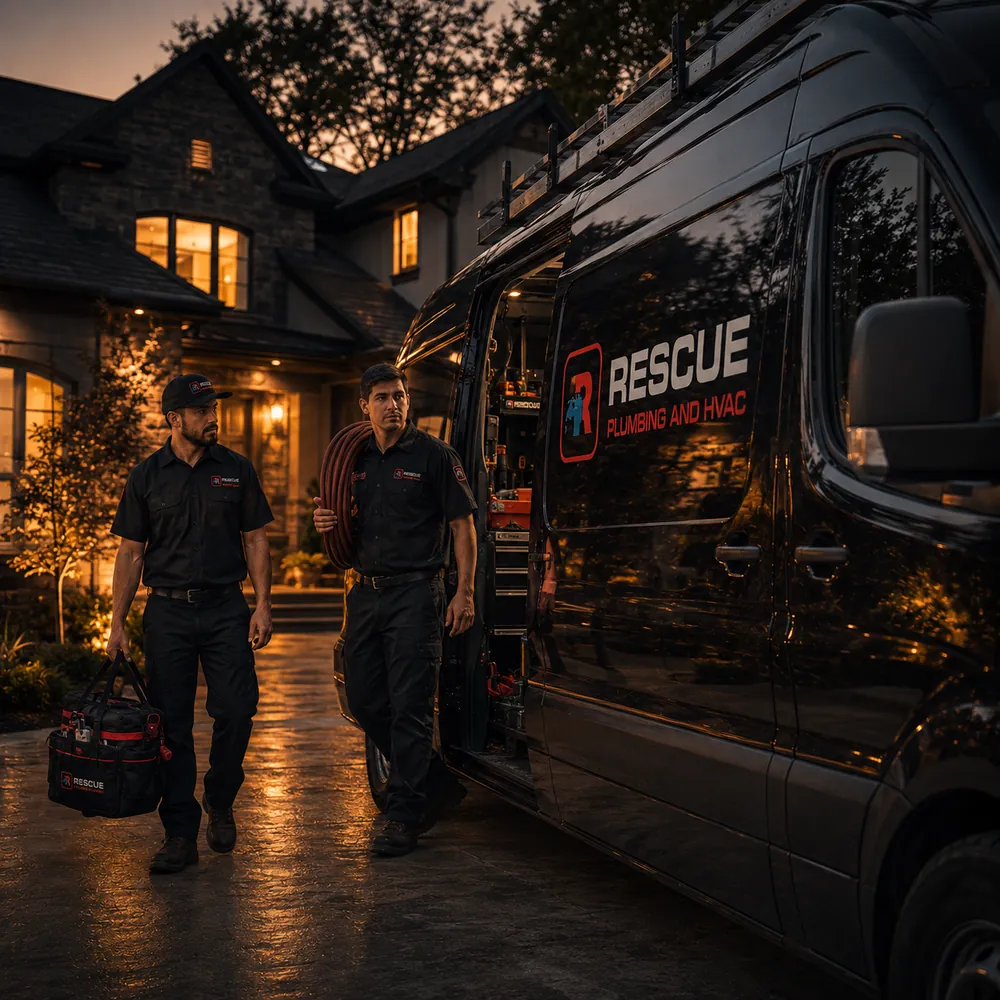
Retire the oil tank.
Heat with gas.
Gas service coordination, gas piping, a properly sized boiler or furnace and the tank removal — one licensed contractor, one warranty. Serving the older neighborhoods of Passaic, Bergen and Essex counties from Haledon.
Why convert
What an oil-to-gas conversion actually involves
An oil-to-gas conversion replaces an oil-fired boiler or furnace with a natural-gas unit and retires the oil tank. In older Passaic, Bergen and Essex neighborhoods, it is one of the most common heating upgrades we do, because the gas main is usually already in the street and the oil system is usually the oldest piece of equipment in the house.
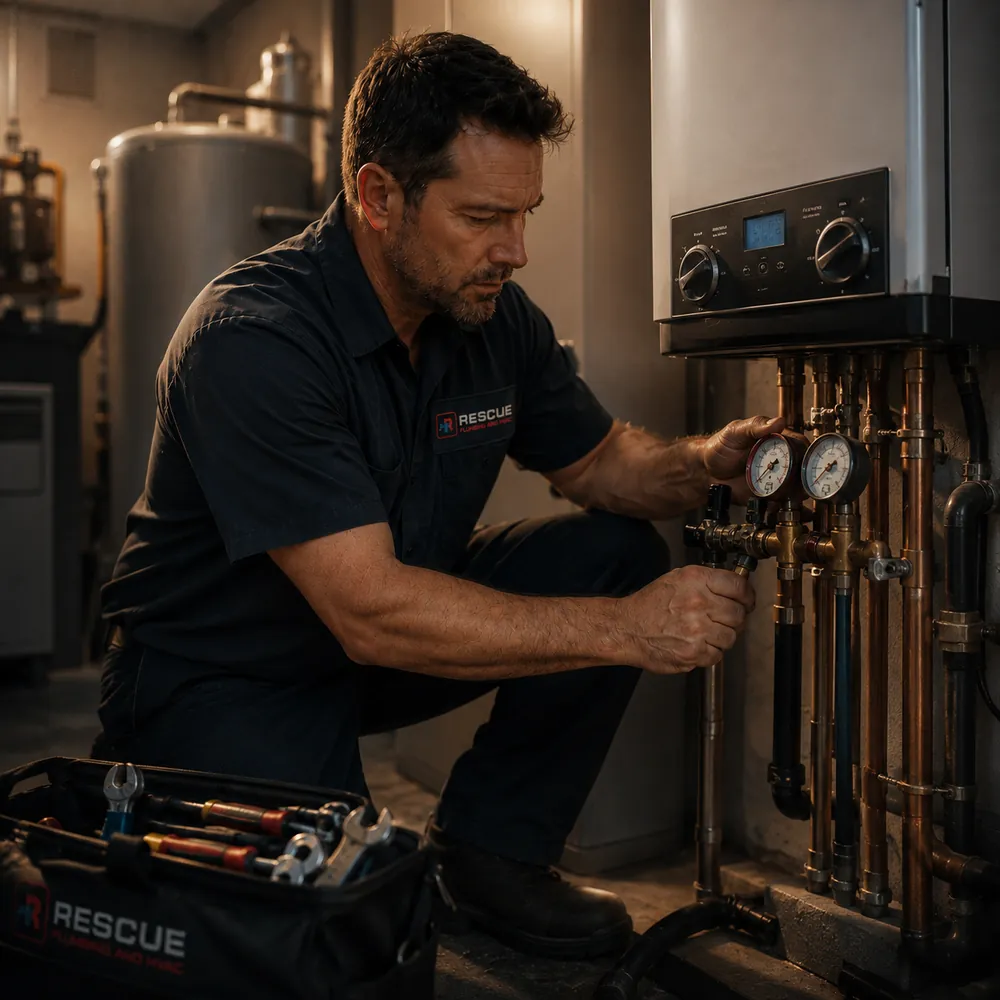
The job has four parts: the gas utility brings service to the house and sets a meter; we run gas piping from the meter to the mechanical room; we install a gas boiler or furnace sized from a heat-loss calculation, not from the old unit's nameplate; and the oil tank is drained and removed or, for underground tanks, handled by a licensed tank contractor. We coordinate all four so the house is never without heat.
Steam systems stay steam, hot-water systems stay hot-water. A conversion does not require changing your radiators or piping — the boiler is what changes. Where an oil furnace serves ductwork, a high-efficiency gas furnace drops into the same duct system, and the flue and combustion air are re-done to the new unit's requirements.
Rescue does
What we handle
We are a Rheem Pro Partner and install Weil-McLain boilers; we will tell you honestly which fits your system. We do not install ductless mini-splits or tankless water heaters — if that is the better answer for your house, we will say so.
Timing
When to start
The gas utility's service-line schedule is the long pole. Homeowners who call in September usually want heat by November, and that is tight. The best window is late spring through August: the utility is less backed up, we can schedule the swap on a mild day, and you go into heating season on the new system with the tank gone.
If your oil boiler is failing now, in winter, we can keep it running while the conversion is arranged, or install a gas unit immediately if service is already at the house. Either way the diagnostic visit is $79, credited to the work.
Straight answers
Oil-to-gas questions we get
Does PSE&G install the gas service line for free?
PSE&G offers a free Energy Solutions Specialist visit and a free post-installation safety check on conversions. Whether the service line and meter are installed at no charge depends on your street and the utility's current terms — we confirm that with PSE&G before you commit to anything.
Are there rebates for converting?
There is no dedicated conversion rebate from PSE&G, but the new high-efficiency boiler or furnace usually qualifies for the standard PSE&G instant equipment rebate, applied on the invoice by a participating contractor. Elizabethtown Gas customers have a separate "Switch to Gas" program. Details are on our NJ rebates page. There is no federal tax credit for heating equipment installed in 2026.
What happens to the oil tank?
Above-ground tanks are drained and removed. Underground tanks are handled by a licensed tank contractor under NJDEP rules; we coordinate the timing so you are never without heat.
How long does a conversion take?
Once the gas service is at the house, the boiler or furnace swap is typically a one- to two-day job. The gas utility's service line timeline is the variable, which is why fall conversions should be started in late summer.
Do I need a permit?
Yes — plumbing (gas piping and boiler) and often electrical subcode permits, plus the utility's own paperwork. Rescue pulls the permits and schedules the inspections.