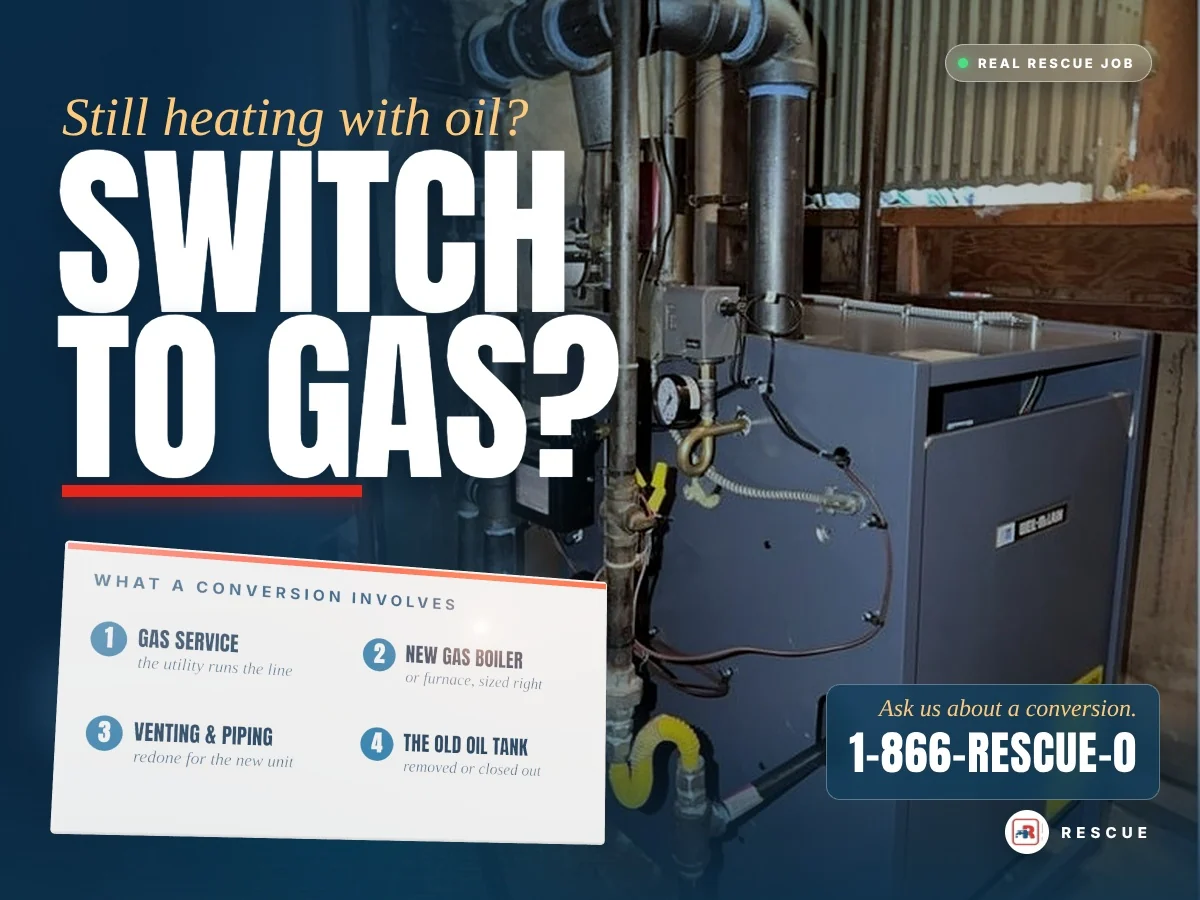
A lot of older homes in Passaic, Bergen and Essex counties still heat with oil. If your oil boiler or furnace is getting old, the question usually comes up before the next big repair: is it time to switch to natural gas? Here's a plain-English look at what a conversion involves, what to think about, and how to plan it.
Why homeowners switch
- No more oil deliveries: no tank to watch, no running out on a cold weekend.
- Less upkeep: gas equipment usually needs less cleaning than an oil burner.
- Old equipment: if the oil system is 20 or more years old, a replacement is coming either way, and that's the natural time to switch fuels.
- The old tank goes away: once the conversion is done, the oil tank no longer has to be maintained.
Step 1: check whether gas is on your street
Everything starts with the gas utility. Call your utility (PSE&G or Elizabethtown Gas in most of North Jersey) and ask whether there's a gas main on your street and what it takes to run a service line and meter to your house. The utility's timeline is usually the longest part of the whole project, so start here.
Step 2: choose the new equipment
If your oil system heats with hot water or steam, you'll get a gas boiler. If it blows warm air through ducts, you'll get a gas furnace that connects to the same ductwork. The new unit should be sized from the house, not copied from the old unit's label, because many older oil systems are oversized.
Step 3: venting, piping and permits
Gas equipment vents differently from oil. Many modern high-efficiency units vent through PVC pipe out the side of the house, and an old chimney may need a liner if it will still be used. Gas piping runs from the new meter to the boiler or furnace. A conversion like this needs permits and inspections, and we take care of the permits the job requires.
Step 4: the old oil tank
An above-ground tank in the basement is usually drained and removed. An underground tank is handled by a licensed tank contractor under New Jersey DEP rules. Ask about the tank early, since it can affect the schedule.
When to do it
A new gas service line can take a while to schedule, so the earlier you start the better. If your oil system is failing right now, a technician can often keep it running while the conversion is arranged.
How we help
Our NATE-certified technicians start with a $79 diagnostic, credited toward the repair, and give you a written price before any work starts. Financing is available on installs, and every job comes with our 1-year parts and labor warranty. Check our New Jersey rebates page for programs that may apply.
See our oil-to-gas conversion service, learn about boiler and hot-water heating, or read repair or replace your furnace.
- How long does an oil-to-gas conversion take?
- Swapping the boiler or furnace itself is usually a one- to two-day job. The gas utility's service line and meter are usually what takes the longest, so start with the utility first.
- Do I need a new boiler or furnace to switch to gas?
- Yes. Oil equipment can't burn natural gas, so a conversion means installing a new gas boiler or furnace.
- What happens to my oil tank?
- An above-ground tank is usually drained and removed. An underground tank is handled by a licensed tank contractor under New Jersey DEP rules.
- Do you offer financing on conversions?
- Yes, financing is available on installs. Call (866) 737-2830 to talk through options.