Pipe burst?Shut the water off, then call.
Every minute the main is open is more water in your walls. Close the valve first, call us second. We dispatch around the clock, stop the damage, then fix what caused it.
- Dispatch 24/7
- Emergency 90-min or $50 off
- Copper, PEX, CPVC galvanised too
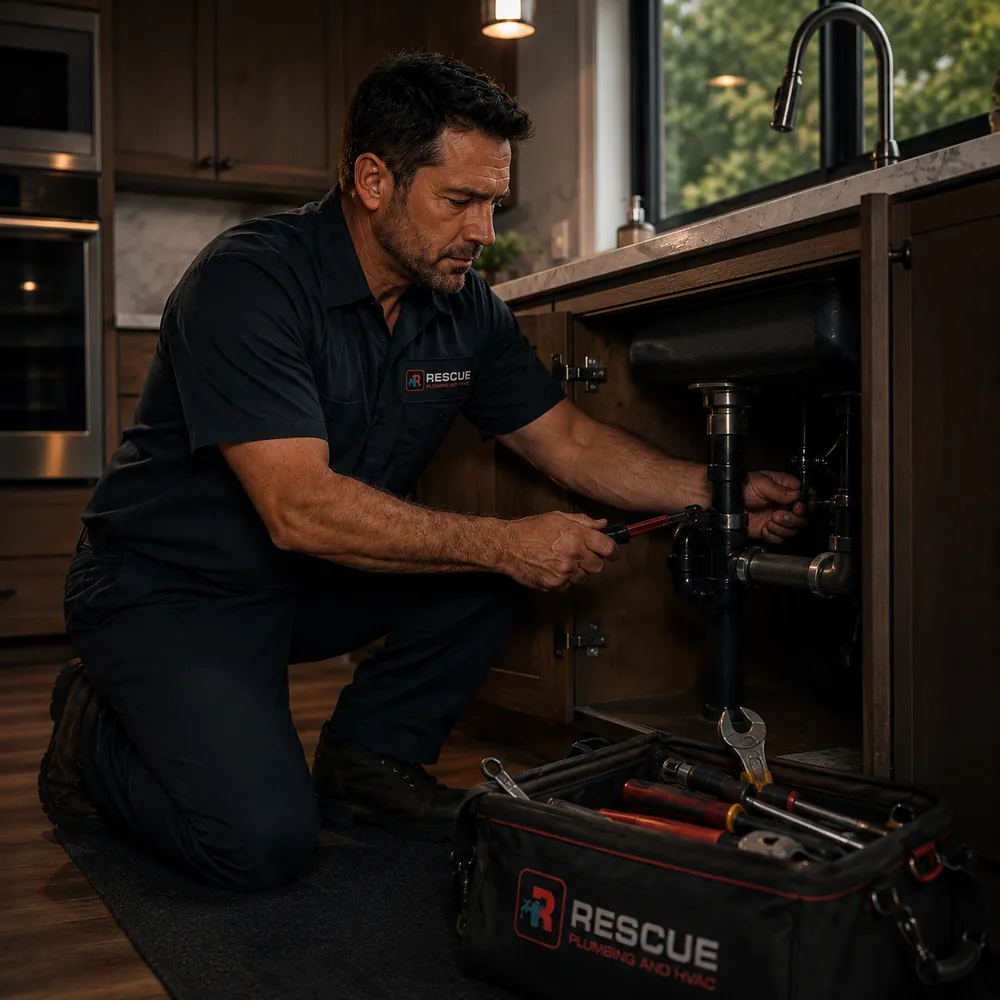
straight to the front
Before we get there
The first sixty seconds decide the bill
Most of what a burst pipe costs isn't the pipe. It's the floor, the ceiling below it and the drying-out afterwards. Here's what to do while you're waiting for us.
Close the main
Usually where the water line enters the house, often near the meter, the front foundation wall or under the kitchen sink. Turn it clockwise until it stops.
Open the lowest tap
A basement or ground-floor faucet. That drains the pipes downward and takes the pressure off the break so it stops pushing water out.
Kill power to wet areas
If water is anywhere near outlets, the panel or a running appliance, shut that circuit off at the breaker. Don't stand in water to do it.
Photograph everything
Wet ceiling, standing water, the pipe itself. Do it before anyone starts mopping. Your insurer will want it and you won't get a second chance.
Don't know where your shut-off is? Find it now, while nothing is wrong, and tell whoever else lives there. It takes two minutes on a dry Sunday and it is the single cheapest thing you will ever do for your house. If you smell gas, none of the above applies, get everyone out of the building first and call from outside.
Smell gas? Leave the building before you do anything else.
Don't flip switches, don't unplug anything, don't use the phone indoors and don't go looking for the source. A light switch is a spark. Get everyone out, leave the door open behind you, and call from the street or a neighbour's house.
Call your utility's emergency line and us. Our plumbers are licensed for gas work, we pressure-test, locate the leak and repair it, then pressure-test again before anything is turned back on.
What we handle
Four calls we take at 2am
Different problems, same dispatch. Tell us which one it is and the right van gets sent.
Stop the water, then fix the pipe
We isolate it, coordinate water extraction if it's bad, and repair or replace the run. Copper, PEX, CPVC and old galvanised all get worked on. Then we look at why it went, because a pipe that burst once in a cold wall will do it again.
Thawed with controlled heat, never a torch
Open flame on a frozen pipe splits it and starts fires. We thaw it properly, then check the whole run for cracks, because ice usually leaves damage behind even when it hasn't burst yet. Then we insulate what froze so next January is quieter.
Main line breaks and failed shut-offs
The valve that won't close is its own emergency, because it means you can't stop anything else. We handle main leaks, breaks and shut-off replacement, and we deal with the township water department and the permits rather than leaving that to you.
Out of the building first, questions after
Get everyone outside, call the utility, call us from somewhere else. Our plumbers are licensed for gas. We test, locate and repair, then pressure-test the repair before anything gets relit. Nothing goes back on until the numbers are right.
Flat rate, no bait
What it costs
Emergency work is quoted the same way as everything else. You see the number before we start, even at three in the morning.
- Licensed plumber rolls, any hour of any day
- Damage stopped first, then the cause diagnosed
- Applied to the repair when you go ahead
Emergency pricing depends on what's behind the wall, how much has to come out to reach it, and the hour. You get the number before work starts. Every repair carries a 1-year workmanship warranty. NJ Master HVACR Contractor Lic. #19HC00145700 · bonded · insured.
Questions we get a lot
Cost, speed & guarantees
How much does emergency pipe repair cost?
Copper repair $385–$685. PEX or CPVC $285–$485. Frozen pipe thaw and repair $385–$985. Slab leak detection $285–$485, with the repair itself $895–$3,495 depending on access. A water main break runs $1,500–$7,500 depending on depth and length. The $79 dispatch fee is waived once you go ahead with the work.
How fast can you get to a burst pipe?
Tier 1 towns, Haledon, Paterson, Clifton, Hackensack, Teaneck, Hawthorne, Newark, Montclair, are 60 to 90 minutes at any hour of the night. We carry SharkBite, PEX, copper and brass fittings on every van, which is why most of these get repaired on the first visit rather than made safe and revisited.
What if it happens at 2am?
Call. A person picks up, not a menu. Dispatch runs every hour of every day from our Haledon HQ, and a burst pipe goes to the front of the queue ahead of anything scheduled.
Do you offer financing on the big jobs?
Yes, on work over $1,500-0% APR for 12 months through GreenSky or Synchrony with a soft credit check. It comes up most on slab leaks, water main breaks and whole-house repipes.
Do you guarantee the repair?
One-year workmanship warranty on every repair. Parts carry 10 to 25 years of manufacturer coverage on copper and PEX. If the same area leaks again within twelve months we come back and fix it at no charge.
What to do right now
What do I do first if a pipe bursts?
Shut the main water valve, which is usually near the meter or where the water enters the basement. Open the lowest faucet in the house to drain what's left and take pressure off the break. Cut power to any flooded area at the breaker. Photograph the damage before anyone cleans up. Then call us.
Where is my main shut-off valve?
In most North Jersey houses it's in the basement on the street-facing wall, near the meter. In slab houses it's often in a utility closet or under the kitchen sink. There's a second one at the curb under a metal cover, but that one belongs to the water department. Find yours on a dry day and show everyone who lives there.
Can a frozen pipe still burst after I thaw it?
Yes, and it often does. Ice expanding inside the pipe leaves micro-cracks that hold until pressure comes back. That's why we pressure-test a thawed line and repair anything compromised before the water goes back on, rather than thawing it and walking away.
Can I thaw a frozen pipe myself?
Not with a torch. Open flame on frozen pipe is a genuine fire risk and it splits the pipe as the ice expands unevenly. A hair dryer worked gently from the tap end back toward the frozen section is the safest thing a homeowner can do. If it's already split, or you can't reach it, leave it alone and call.
Why do pipes freeze here?
Most often it's an outdoor spigot left connected to a garden hose through a hard freeze. After that it's pipes in an unheated crawlspace or garage during a real cold snap, and vacant houses with the thermostat set too low. Most of it happens during the first hard freeze of the season, before anyone has thought about winterising.
What actually causes burst pipes around here?
In rough order: a frozen outdoor spigot in a deep freeze, copper corrosion in pre-1970 houses, slab leaks from foundation settling, a washing machine hose letting go, and a toilet supply line doing the same. Those last two are the most common non-winter causes and both are a five-minute replacement you should be doing every five years.
How do I stop it happening again?
Insulate the runs in unheated space with foam sleeves, which cost a couple of dollars a foot. Drip the cold taps on the worst nights. Leave cabinet doors open under sinks on outside walls. Disconnect garden hoses and shut the exterior spigots off in November. Keep the thermostat above 55°F if you're travelling. Rerouting the pipe out of the cold zone is the only permanent fix, and it's the one we'll recommend if the same run keeps freezing.
Bigger jobs & materials
Do you do slab leak detection?
Yes, with electronic detection rather than a jackhammer, acoustic listening, thermal imaging and a sub-floor camera. Where we can, we reroute the line through a wall or ceiling so the concrete stays shut. Detection is $285–$485 and the repair runs $895–$3,495.
Will you fix a main water line break in the yard?
Yes, including the excavation, the new pipe in copper, PEX or HDPE, the backfill and the surface restoration. Trenchless where the ground allows it, which saves the lawn and the driveway. Cost depends heavily on depth and run length, $1,500 to $7,500 is typical, and a long run can reach $12,000.
Do you do whole-house repiping?
Yes. A typical 2,000 sq ft North Jersey home runs $8,500–$18,500 depending on access, material and fixture count, and takes three to five days. It's the right call for galvanised pipe replacement, after flood remediation, or when a house has a history of leaks that keep moving around.
What pipe materials do you use?
Type L copper for permanent visible work and gas lines. PEX-A or PEX-B for repipes and concealed work, because it's flexible and tolerates freezing far better. SharkBite push-fit for emergency repairs in tight spaces. CPVC only when somebody specifically asks for it. We don't install galvanised or polybutylene.
Do you work on old galvanised pipe?
Yes, and plenty of pre-war North Jersey housing still has it. Galvanised corrodes from the inside, so by the time one section leaks the rest is usually close behind. We'll repair what you called about and tell you honestly what the rest of the run looks like, including when a repipe is the better use of the money.
Will my insurance cover it?
Most homeowner policies cover sudden pipe failure and are much less generous about slow leaks that were ignored. We give you photographs, a written diagnosis and an itemised invoice, which is what an adjuster asks for. We don't bill insurance directly, most plumbers don't, and we won't tell you what your policy covers, because that's between you and your carrier.
You might also need
Related services
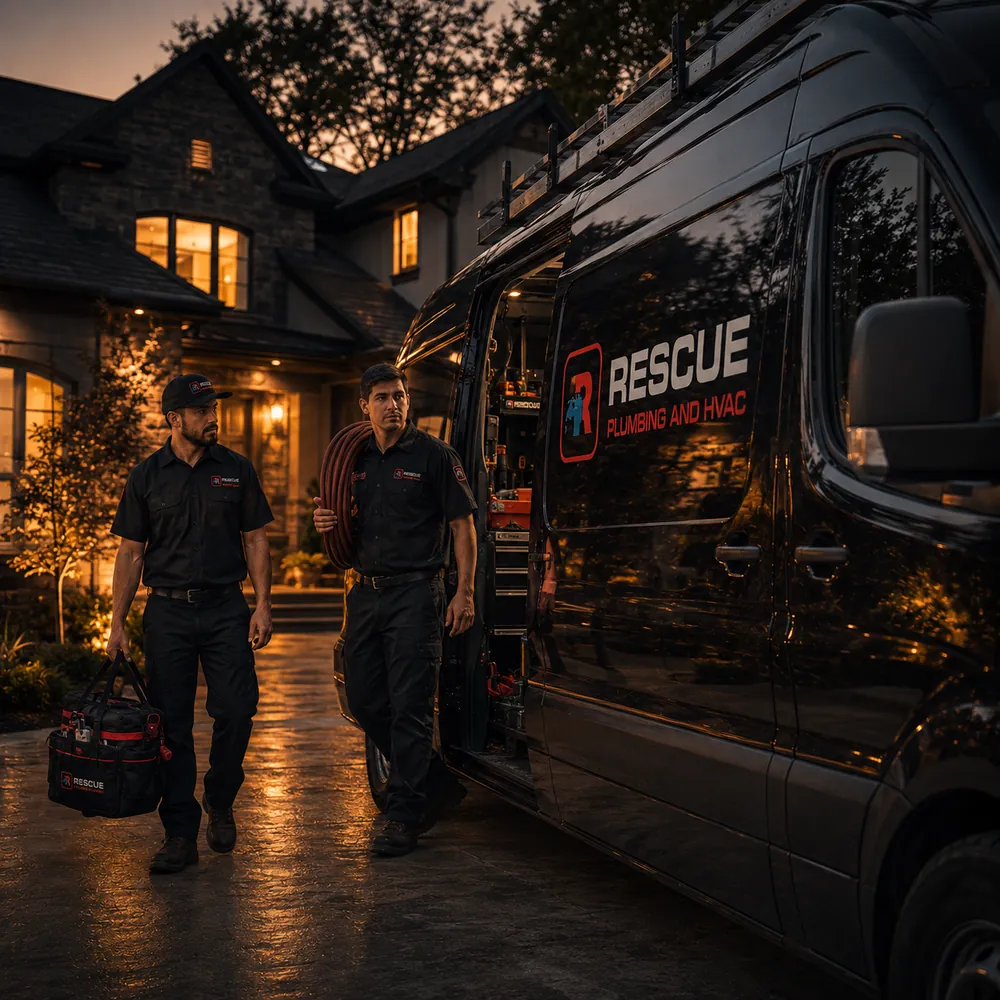
Water still coming in?
Close the main, then call. A real dispatcher, any hour, and a licensed plumber on the way.