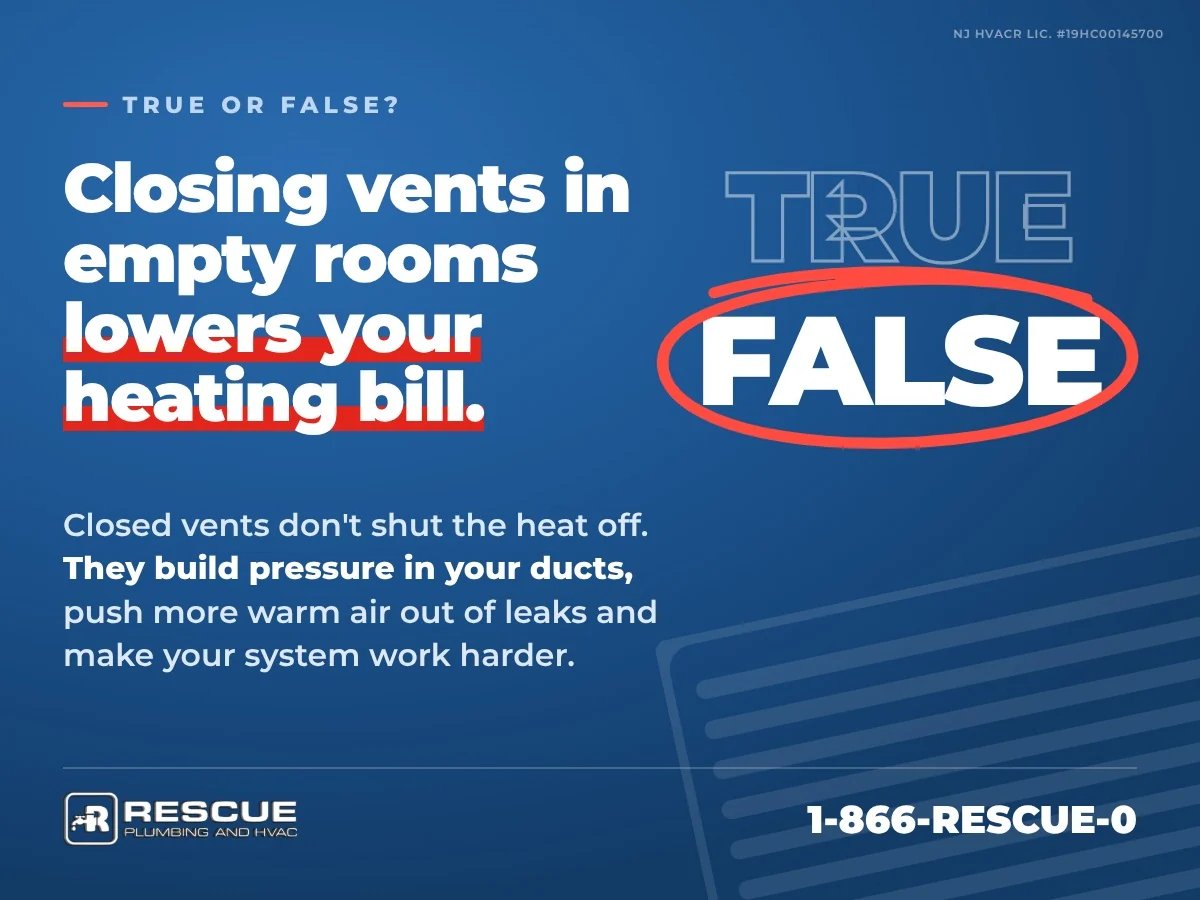
It's one of the most common heating-season tips: close the vents in rooms you don't use and send the heat where you need it. It sounds logical. But on most forced-air systems in North Jersey homes, closing vents doesn't lower the bill, and it can make the system work harder.
Why closing vents doesn't work the way you'd think
Your furnace blower is sized to move a set amount of air through the whole duct system. Closing a vent doesn't tell the furnace to make less heat. The same air is still being pushed into the ducts, now with fewer places to go.
- Duct pressure goes up. Many duct systems already run above the pressure they were designed for. Closing vents adds more restriction.
- More heat leaks out. Higher pressure pushes more warm air out of gaps and joints in the ductwork, often into the basement, attic or wall cavities instead of your rooms. Building-science research has found that closing registers can increase energy use because of those extra duct losses.
- The blower works harder or moves less air. Variable-speed blowers ramp up (using more electricity) to fight the restriction. Older single-speed blowers simply move less air.
- Low airflow is hard on equipment. A furnace needs enough air across its heat exchanger. Starving it of airflow makes it run hotter than it should, and in summer, low airflow can freeze an A/C coil.
- Closed-off rooms get cold and damp. Colder walls in a shut room can lead to condensation, and in a cold snap, pipes on outside walls are more at risk.
What to do instead
- Leave supply vents open and keep furniture and rugs off them, and keep return grilles clear too.
- Keep the filter clean. A clogged filter restricts airflow the same way closed vents do.
- If one room is too hot or too cold, the fix is usually balancing the system, sealing ducts or adjusting dampers, not closing vents. See why one room is colder than the rest.
- Want to heat parts of the house separately? That's what a properly designed zoning system does, with dampers and controls built for the airflow, not closed registers.
- Get the furnace checked if rooms are uneven or the system runs nonstop. A furnace tune-up is $189.
Is it ever okay to close a vent?
Partly closing one vent to fine-tune a single room is usually fine. The trouble starts when several vents are shut at once, especially on a system that's already undersized for its ducts or has leaky ductwork. If you're not sure, have a technician look at your airflow before you start closing registers.
Need help with uneven heat?
Rescue Plumbing & HVAC offers same-day service across North Jersey, 24/7. Our diagnostic visit is $79 and is credited toward the repair, and every job comes with a 1-year parts and labor warranty.
- Does closing vents in unused rooms save money?
- Usually not on forced-air systems. It raises pressure in the ducts and pushes more heat out of duct leaks, which can cancel out or outweigh any savings.
- Can closing vents damage my furnace?
- Closing several vents reduces airflow, which makes the furnace run hotter and the blower work harder. Over time that's hard on the equipment.
- How do I heat only part of my house?
- A zoning system with motorized dampers and separate thermostats is designed for that. Closing registers is not a substitute.
- Why is one room colder than the others?
- Common causes include duct leaks, poor balancing, blocked vents, a dirty filter or the room's location. A technician can measure airflow and find the cause.