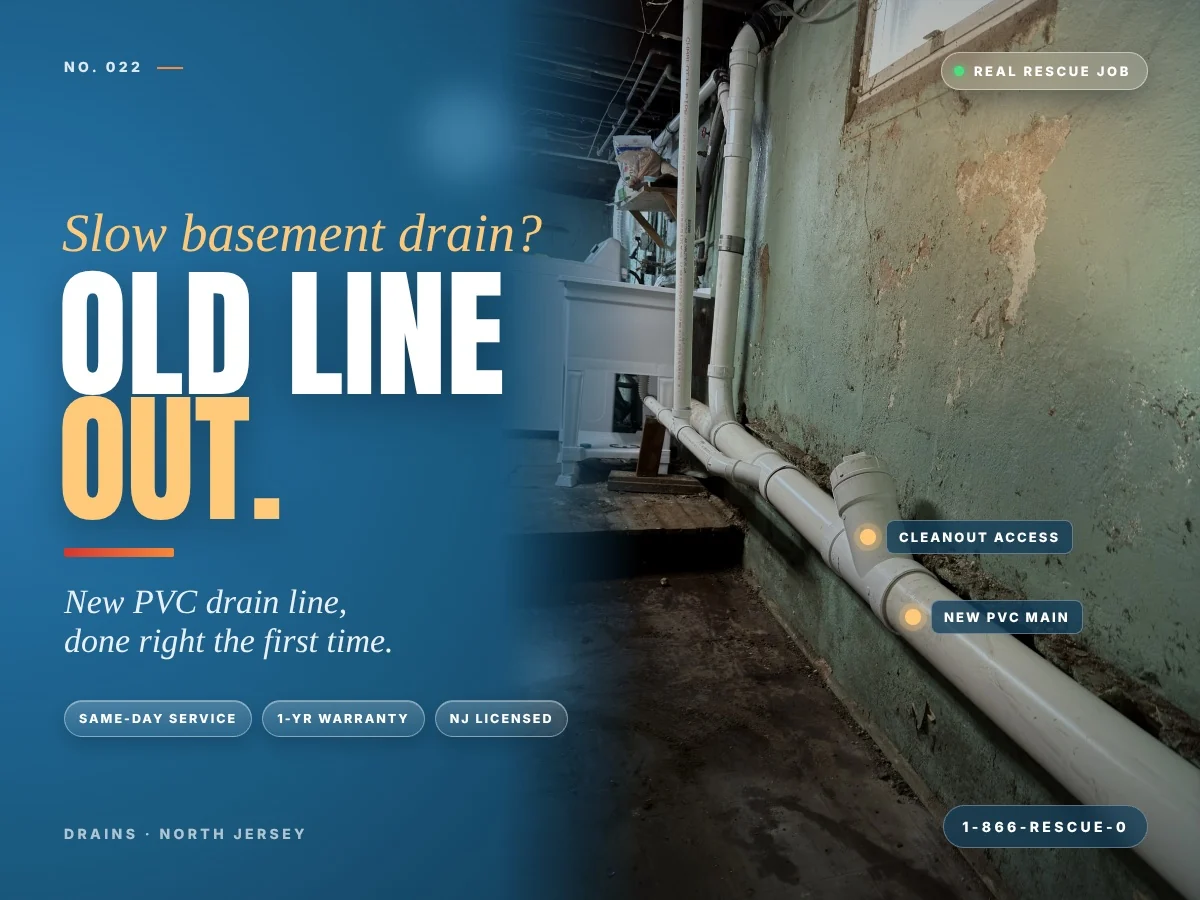
Most basement drain problems start small: a laundry tub that drains a little slower, a gurgle from the floor drain, a faint sewer smell after a heavy rain. In a lot of older North Jersey homes, those aren't just clogs. They're signs the drain line running along the basement wall or under the floor is wearing out.
Signs the line itself may be failing
- The same drain clogs again and again, even after it's been snaked.
- Gurgling from a floor drain or toilet when the washer or a sink drains.
- Sewer smell in the basement that comes and goes.
- Water backing up into a floor drain when upstairs fixtures run.
- Visible damage on exposed pipe: rust, flaking, wet spots, or staining around joints.
- Several fixtures slow at once. One slow sink is usually a local clog; several usually point to the main line.
A 2-minute check you can do today
- Run the basement laundry tub or sink at full flow for about a minute.
- Watch and listen at the nearest floor drain. Gurgling or rising water means the line downstream isn't moving water well.
- Flush an upstairs toilet and listen again in the basement.
If you see water come up anywhere it shouldn't, stop running water and call a plumber before it turns into a backup.
Cleaning vs. replacement
Not every slow drain needs new pipe. A clog from grease, wipes or buildup can usually be cleared. Our guide to drain snaking vs. hydro-jetting explains the difference. Replacement makes sense when the pipe itself is cracked, corroded, sagging or keeps clogging at the same spot after it's been cleaned.
What a replacement looks like
The photo above is from a recent Rescue job: an old basement drain line replaced with new PVC, with a cleanout added so any future clog can be cleared quickly without opening walls or floors. A typical replacement includes:
- Inspecting the line to find exactly where it's failing
- Removing the damaged section and installing new pipe at the correct slope
- Adding a cleanout where access is needed
- Testing every connected fixture before we leave
Every job is backed by our 1-year parts and labor warranty. Learn more about our drain cleaning and sewer line repair services, or see our Paterson plumbing page.
If it's backing up right now
Stop using water in the house, keep people and pets away from any sewage, and call. We're available 24/7 for emergency plumbing across North Jersey.
- How do I know if I need a drain line replacement or just cleaning?
- If the drain clears and stays clear, cleaning was enough. If it keeps clogging in the same spot, smells, or the pipe shows rust, cracks or leaks, the pipe itself is likely the problem and a section may need replacing.
- Why add a cleanout?
- A cleanout is an access fitting on the drain line. It lets a plumber clear future clogs quickly and safely without removing toilets or opening walls.
- Is a gurgling floor drain an emergency?
- Not always, but it's an early warning that water isn't flowing well. If water starts coming up out of the drain, stop using water and call right away.
- Do you work in my town?
- We serve Bergen, Passaic, Morris, Essex, Hudson and Union counties, including Paterson, Haledon, Wayne and Clifton. Call (866) 737-2830 to confirm your address.