Below the first floor
What a Pequannock basement inherits
In Pequannock the basement is where the town's own facts land: a river that has topped flood stage by more than nine feet, a sewer that reaches only about half the township, and flood rules that now reach the furnace.
1,100homes flooded in Pequannock during Hurricane Irene
- 1Flood-zone equipmentA floodplain ordinance introduced in 2025 counts HVAC work toward the 50 percent substantial improvement test.
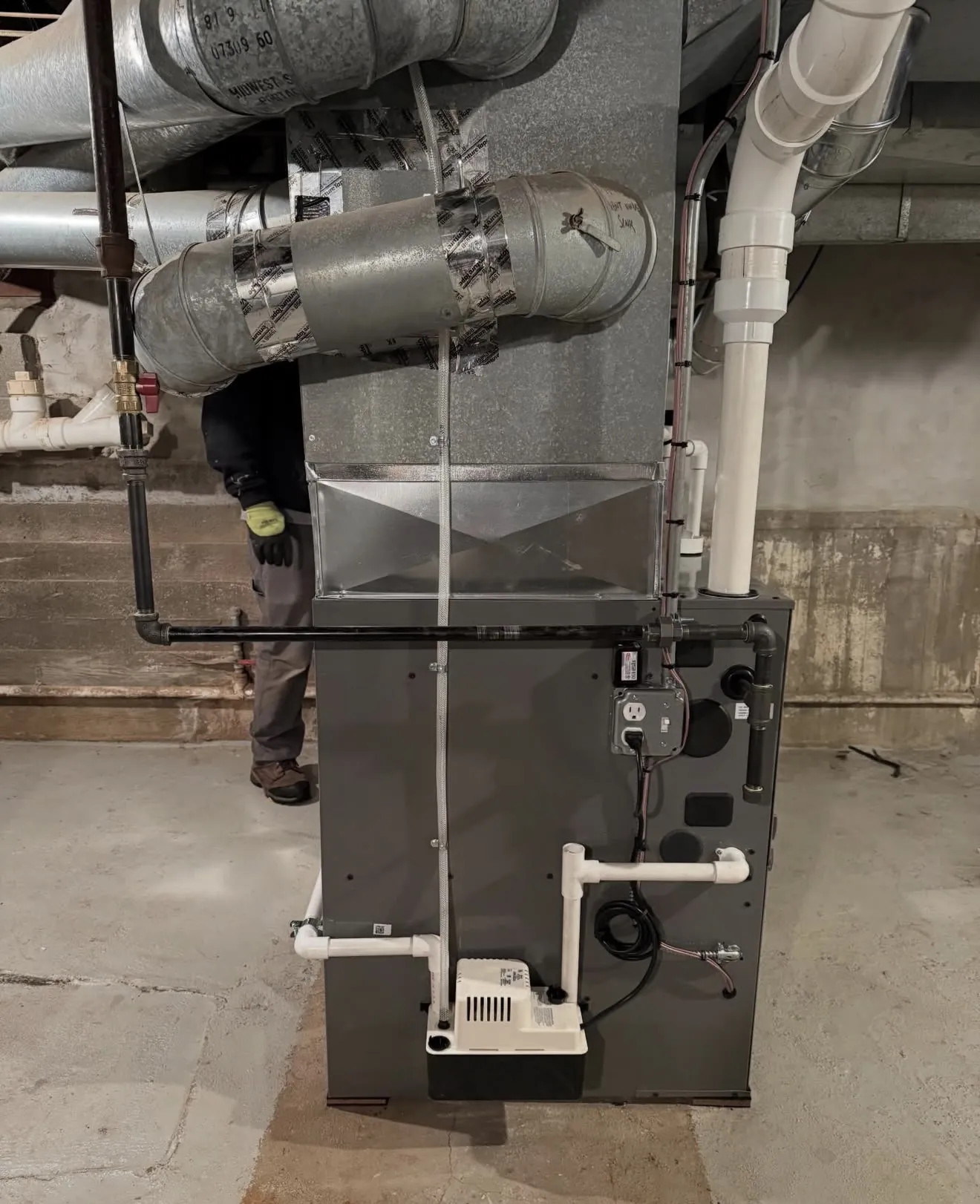
- 2Keep the sump outsideOnly about half the township is sewered, and the 2020 sewer plan names sump pumps and roof drains as a way stormwater gets in.
- 3Gas from PSE&GPSE&G brings gas to the meter. The piping from the meter to the furnace is the owner's.
Flood-zone equipmentA floodplain ordinance introduced in 2025 counts HVAC work toward the 50 percent substantial improvement test.
Keep the sump outsideOnly about half the township is sewered, and the 2020 sewer plan names sump pumps and roof drains as a way stormwater gets in.
Gas from PSE&GPSE&G brings gas to the meter. The piping from the meter to the furnace is the owner's.